
The Hunger Strikes – Fact and Fiction (part 2)
Having posted the introduction to my hunger strikers series and a first post looking at the background and events surrounding the hunger strikes, questions remain. Who were the 10 men who chose death rather than serve out their sentences like any other prisoner, who thought they somehow deserved special treatment? With the 25th anniversary of the hunger strikes taking place this year, I think it's only fair that we remember just exactly who these men were – and why they were in prison in the first place.
First though, perhaps a more important question - why does it all matter? As well as prompting the huge electoral successes of (as well as marketing opportunities for) Sinn Fein, the hunger strikes provoked international concern about and condemnation of the British government's actions.
Blame the Brits
The British government would be condemned all over the world for allowing the men to die. While an emotional reaction to prisoners committing serial suicide is understandable, it's not, given the circumstances, the most logical. Students in Milan burned British Flags chanting "Freedom for Ulster" (the irony), while in Paris marxists would march behind portraits of Sands shouting "The IRA will conquer." In Oslo, a balloon filled with tomato sauce (more irony) was thrown at Queen Elizabeth and that bastion of impartial reporting, Soviet state newspaper Pravda, described the event as "another tragic page in the grim chronicle of oppression, discrimination, terror and violence" in Ireland.
Too Many Students?
Everyone loves to hate the work-shy, tax-dodgers that (allegedly) inhabit universities, but it now seems the education minister wants to know if Northern Ireland has too many students (or too few). 44% of 18-21 year olds are enrolled for full-time higher education, not that far off Tony's 50% target. The question is whether we as a society actually want or need 50% of people attending university, and are there jobs for that many psychology and media studies graduates?
Universities obviously want more students so they can claim they need more money from government, but more students tends to mean higher rates of students dropping-out. The drop out rates for Ulster's universities runs at about 19%. This is roughly the UK average, but still quite a shocking waste and a possibly a sign that universities are already recruiting too many students who would perhaps be better suited to alternative career paths.
Hain Must Freeze Controversial Reforms
 by beano
  on 29 Apr 2006 at 13:20. Categories: News, Northern Ireland, Direct Rule, Local Government, Education
 Conservative MP David Liddington has called on the government to put a freeze on controversial reforms in the areas of education and local government until it becomes clear whether or not power sharing will be restored by the November 24th deadline imposed by the government.
This sounds like a great idea to me. All the parties bar Sinn Fein have said they are opposed to the 7-council model approved by the government under local government reform plans, and both the UUP and DUP are opposed to the abolition of academic selection for post-primary education. What better incentive to get them into power sharing than to give them a chance to right those wrongs?
The Hunger Strikes – Fact and Fiction (part 1)
Growing up I only ever had, like most unionists I imagine, a very basic understanding of what the hunger strikes and blanket protests were for, ie the republican terrorists didn't like the thought of being treated like the other criminals in prison at the time. This always struck me as unusual, I mean when you're carrying a gun or shooting at someone, the reason why you're doing it (excluding self-defence) is seldom significant.
In broad terms, that's exactly what they were doing it for. Nevertheless, the details of events between 1976 and 1981 deserve at least a brief look.
New Host, New Look
On moving web hosts to BeezerHost, I decided the time was right for a new look for Everything Ulster. Unfortunately it seems we're having one or two problems with Internet Explorer (as per f**king usual). If you're having any problems, let me know here and I'll see what I can do (I will be making the old skin selectable shortly). For a better solution, download a better browser: Mozilla Firefox, which not only works like a browser should, but has a free popup blocker too.
Competition Commission Slams Banks
The Competition Commission has attacked the local "big 4" banks (Northern, First Trust, Ulster Bank and Bank of Ireland) over their high charges on personal accounts in an interim report which forms part of an investigation into a complaint by the Consumer Council.
Reluctance of consumers to change banks is cited as one reason why the banks get away with the unreasonable charges, but lack of competition is being blamed as well. The charges of some local banks (especially First Trust) don't compare favourable with the national banks (like the Co-operative Bank, Nationwide and Halifax, all of whom operate in Northern Ireland).
| Transaction | First Trust | Northern | Co-Operative Bank |
|---|---|---|---|
| Set up Direct Debit / Standing Order | £4.50 | Free | Free |
| Direct Debit / Online Transfer | 43p per transaction | Free | Free |
| Debit Card / Cash Machine | 43p | Free | Free |
| In-branch withdrawal | ? | 13 per quarter free, then 70p | Free |
| Duplicate Statement | £10/page | £6/page | £5/statement |
From my quick analysis, Northern seem to come off the best of a bad bunch. Steve Costello of the Consumer Council said "people here pay more and get less on their personal current accounts" while the Ulster Bank, one of those being investigated, claims "the personal current account market in Northern Ireland has never been more competitive." The problem is that both these statements are true. The current account market here does seem better than ever, but it was so far behind the real banks that it hsan't even caught up yet.
The Hunger Strikers – Fact and Fiction (introduction)
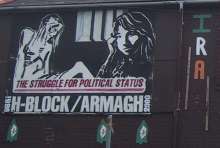 A generation of Republicans has already grown up idolising the 10 men prepared to die rather than face their sentences
Whatever your feelings on the Hunger Strikers of 1981, there's no doubt that they've had a big influence on a large number of people. The question is whether the people that they've influenced have been influenced by events as they happened, or by the myths and romance that has grown up around the hunger strikers. As Sinn Fein and republicans across Northern Ireland recognise the 25th anniversary of the Ulster hunger strikes, it seems only appropriate that the rest of us take the opportunity to learn about something that is clearly very important to our neighbours.
In a series of special posts in the near future, Everything Ulster will be taking a closer look at the events surrounding the hunger strikes and the men involved; trying to separate fact from fiction.
Everything Ulster on the move
No, despite a conversation I had last night I haven't completed a version of Everything Ulster for mobile phones. I'm moving web hosts again. My account with Door Host is up on the 17th May and I'm transferring to Beezer Host, which will hopefully be slightly quicker to respond as well as working out better value.
Update: The move is now completed. Your patience is appreciated. 
Stadium For Belfast on RSS
Buoyed by the news (yet to be reported there) at the start of the month that Belfast City Council are to proceed with their plans for a 25,000 regardless of what the government does at the Maze, Stadium For Belfast has recently changed its news page, utilising WordPress blogging software.
For all the blogheads out there Stadium For Belfast now has an  feed so you can check for updates without even having to visit the site.
Loyalists Lose PR Battle - Again
by beano on 25 Apr 2006 at 14:36. Categories: Northern Ireland, Loyalists, Ulster-Scots, Republicans I was disappointed to read this post on Slugger yesterday. After congratulating the Harryville Ulster-Scots Society just a few weeks ago on having a UDA mural replaced by a new one promoting Ulster-Scots culture, I'm dismayed to read that the mural is to be painted over with a fresh UDA one.
The move comes after Republicans have failed to live up to their part of the deal which saw the mural replaced (ie removing tricolours from another part of the town) by putting up more tricolours than there were in the first place.
This is not the first time Republicans have deliberately provoked unionists and loyalists to create controversy, but yet they seem to fall for it every time. Instead of taking the moral high ground and expressing their disappointment at the failure of Republicans to adhere to a compromise with their British neighbours, the loyalists of the area have decided the best way to retaliate is to blight their own community, once again, with a mural honouring a murderous gang, responsible for the deaths of many people, Protestant and Catholic alike.
When will they learn? Look guys, it's not too late. Instead of cutting off your nose to spite your face, leave the Ulster-Scots mural there. It'll instill a much greater sense of pride among your own community, as well as demonstrating to the world the world that the republicans in question are completely unreasonable.
Update
Apparently there's a row over who started it. Surprising, no?

 XML Feeds
